How Does a Steel Crawler Undercarriage Work? [2026 Expert Guide]
What Is a Steel Crawler Undercarriage? Unlocking the Mechanics of Heavy-Duty Mobility
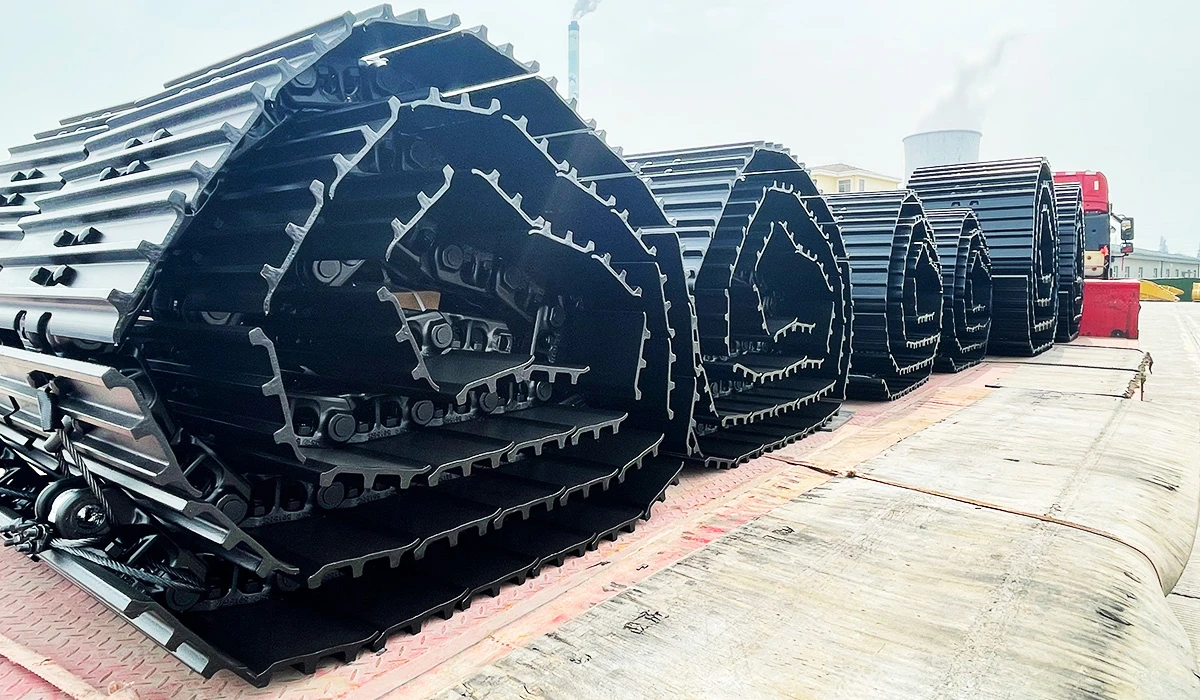
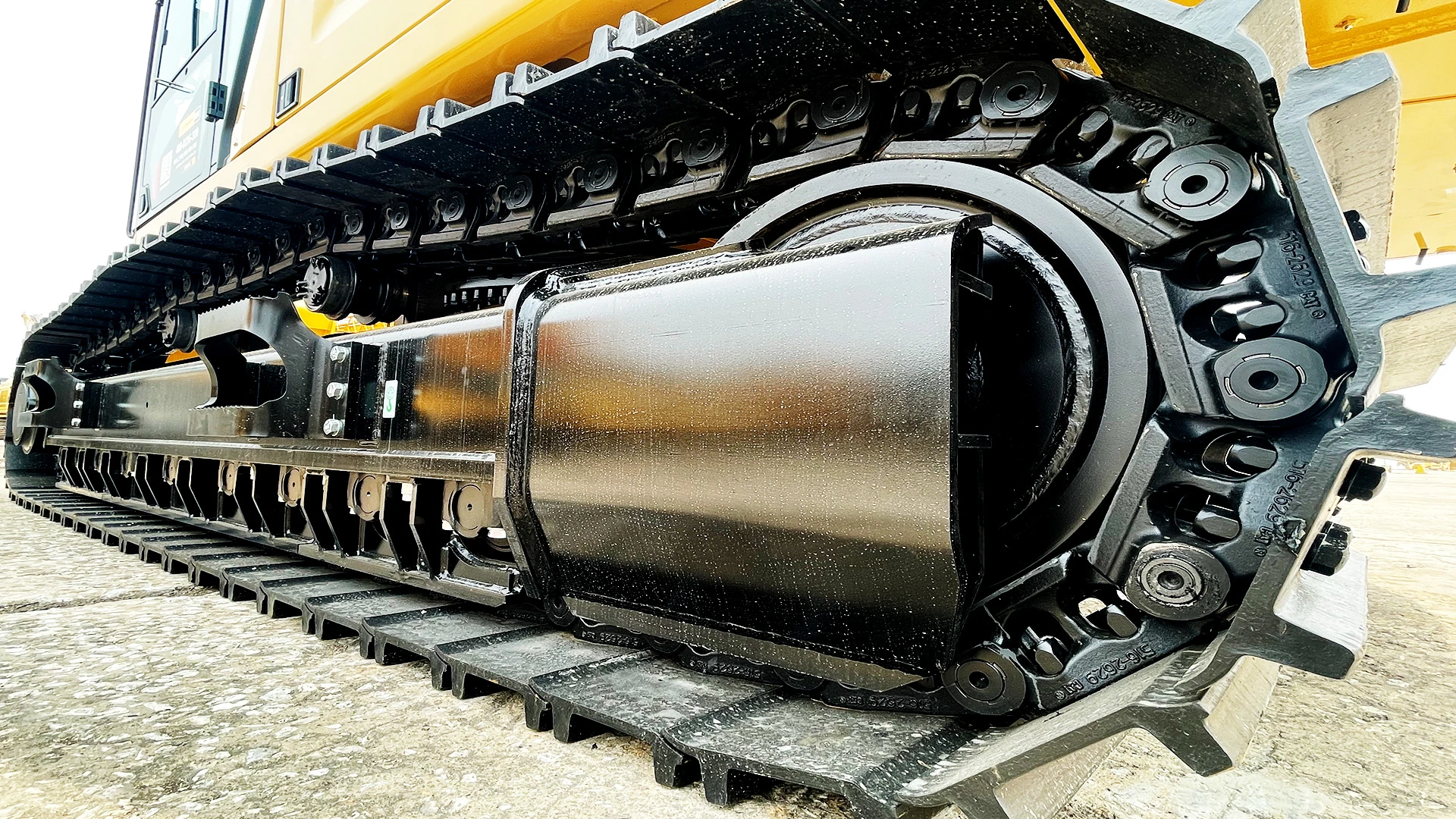
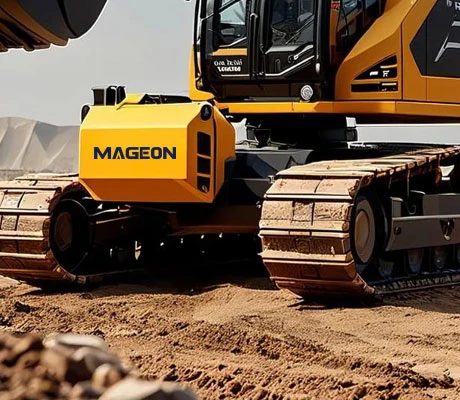
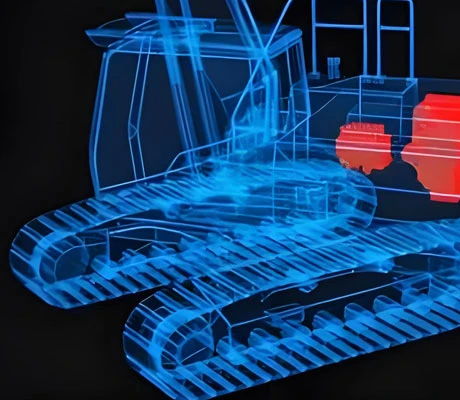
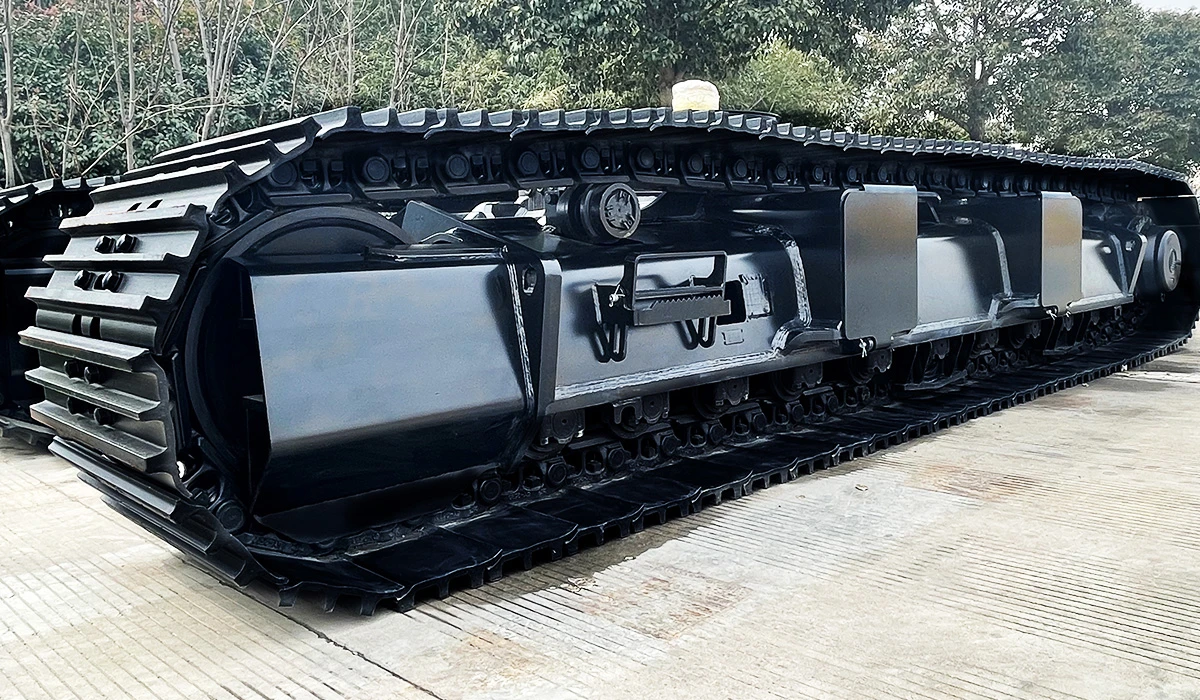
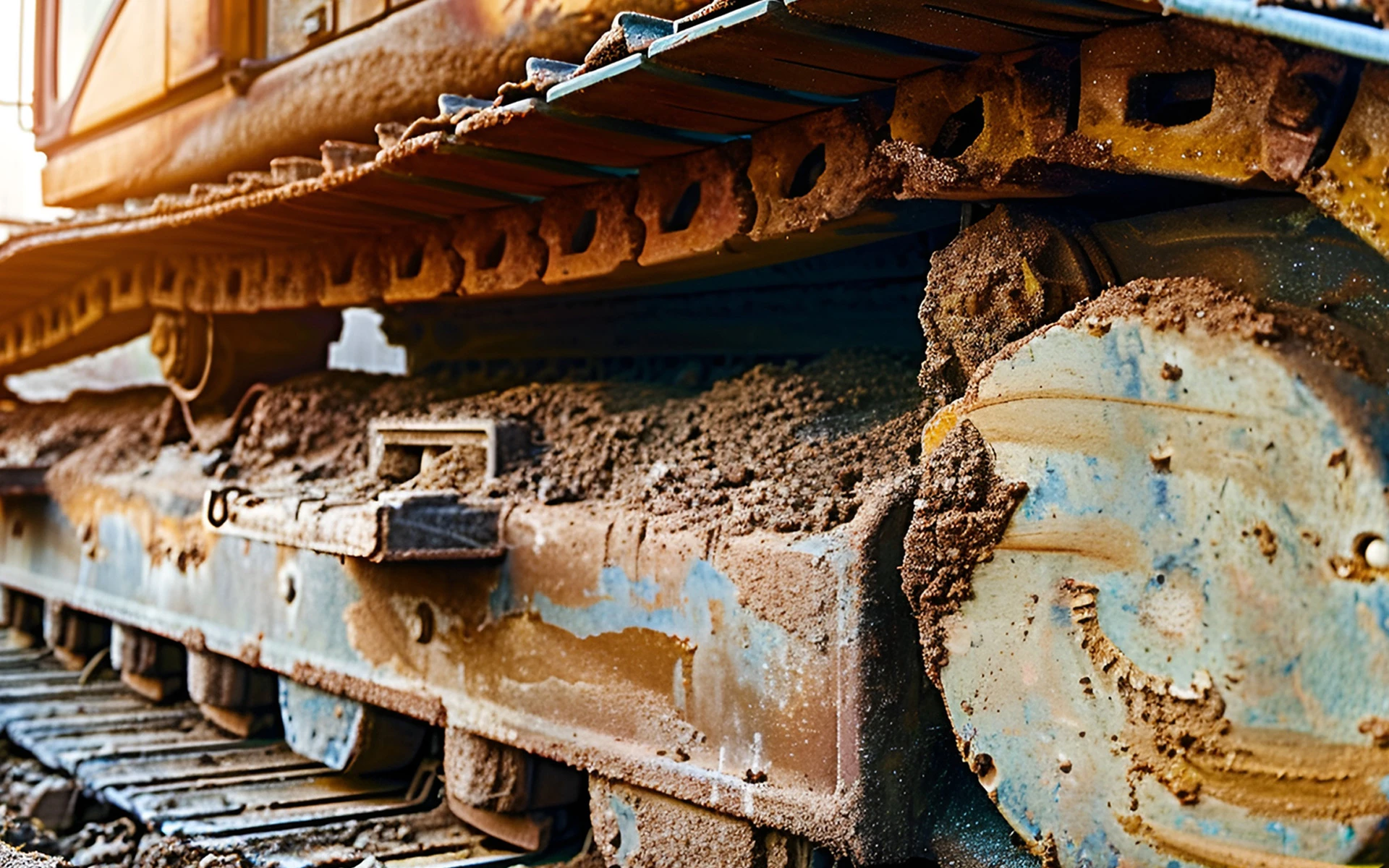
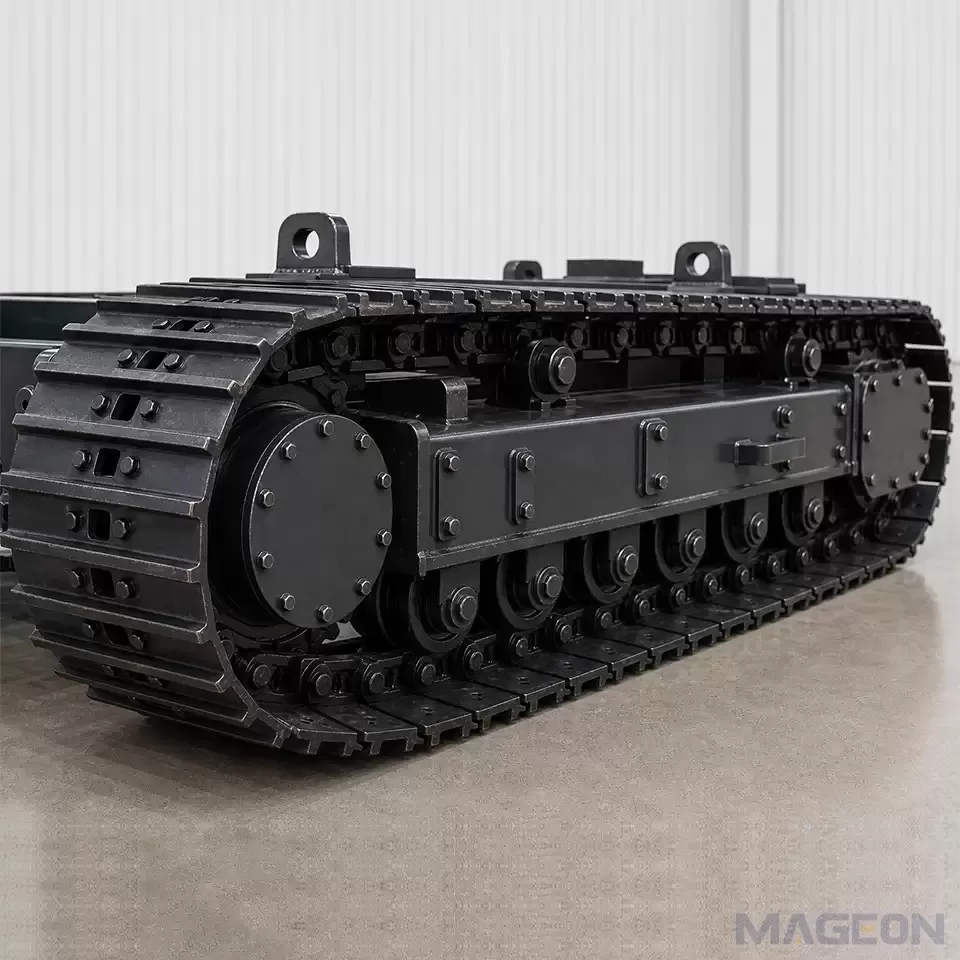
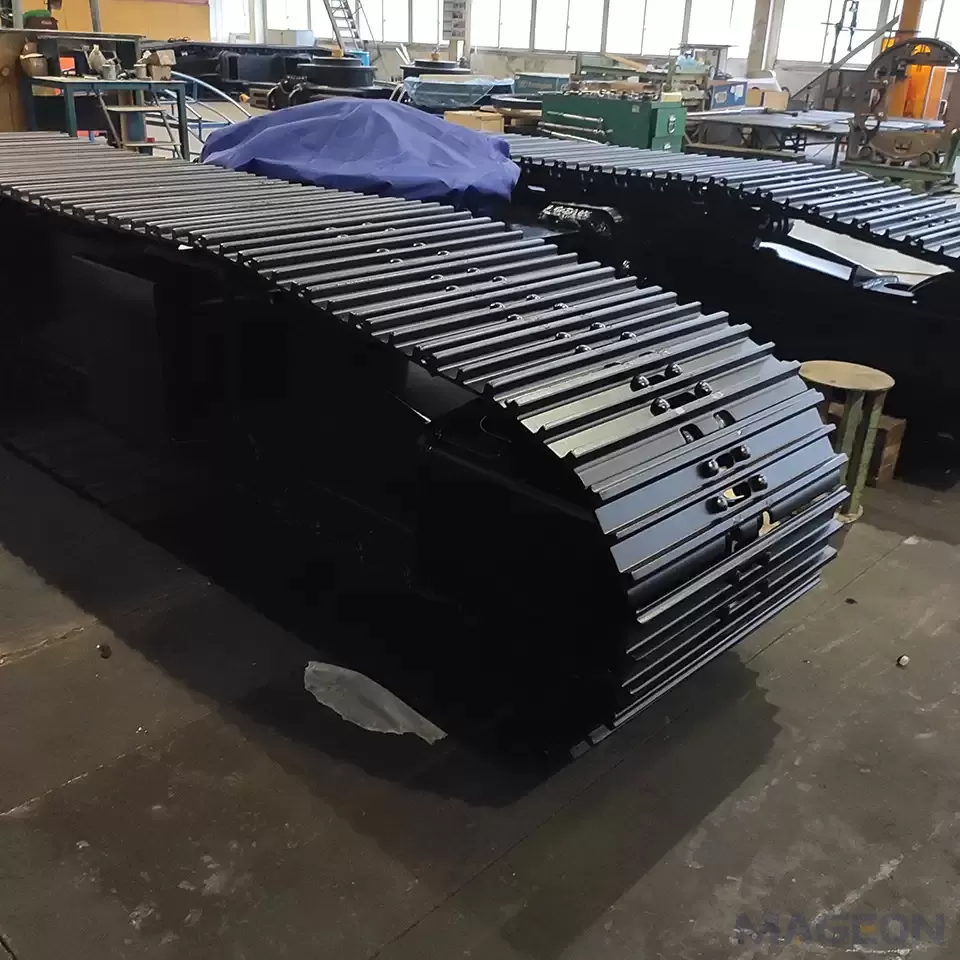
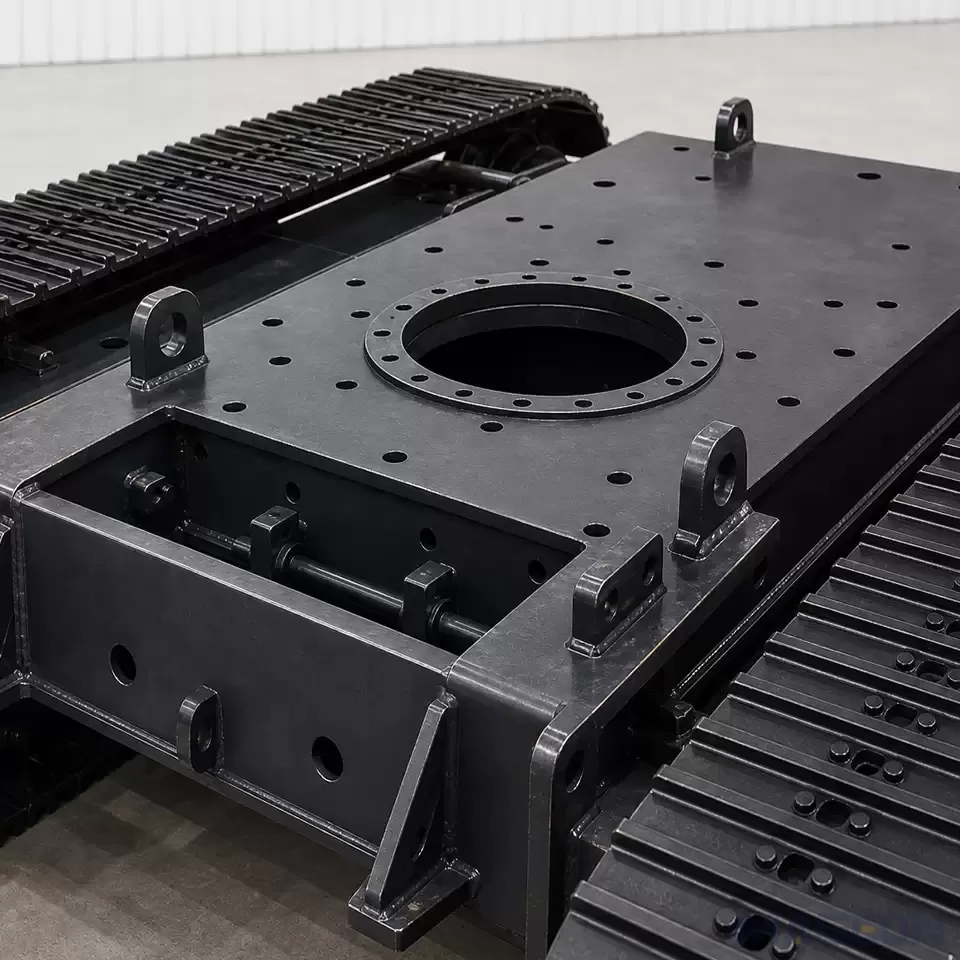
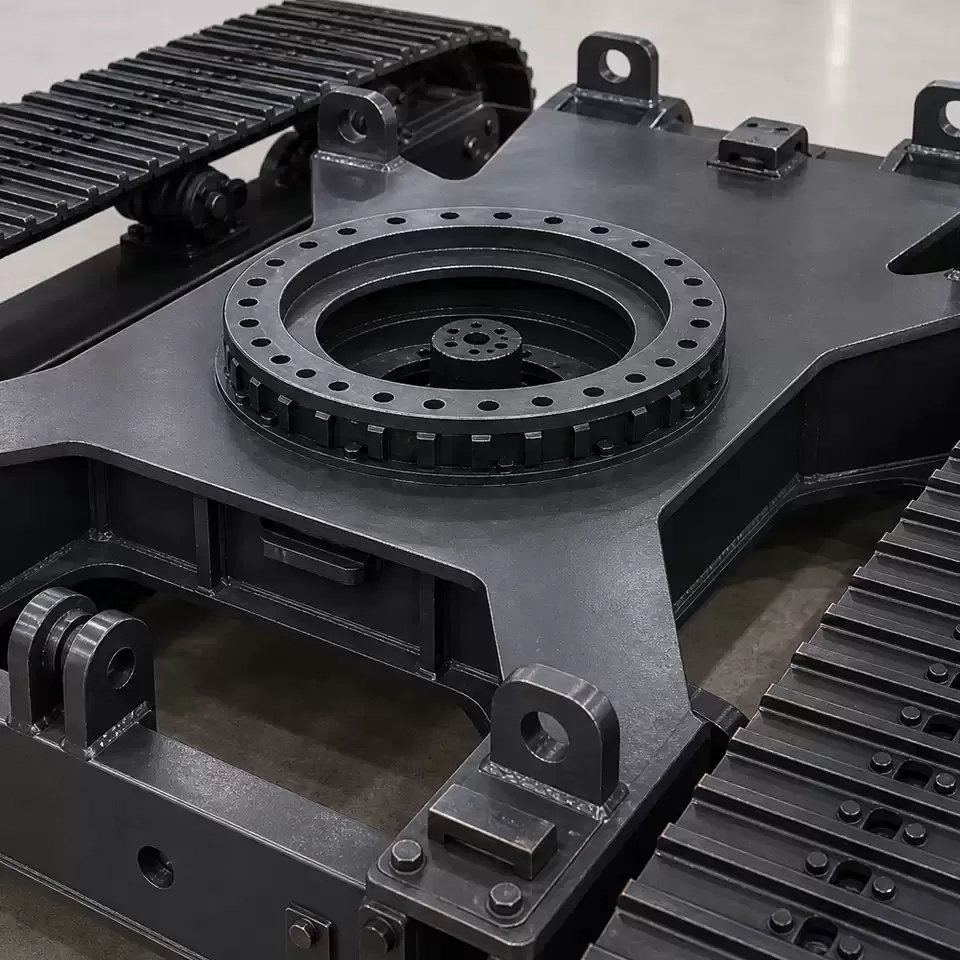
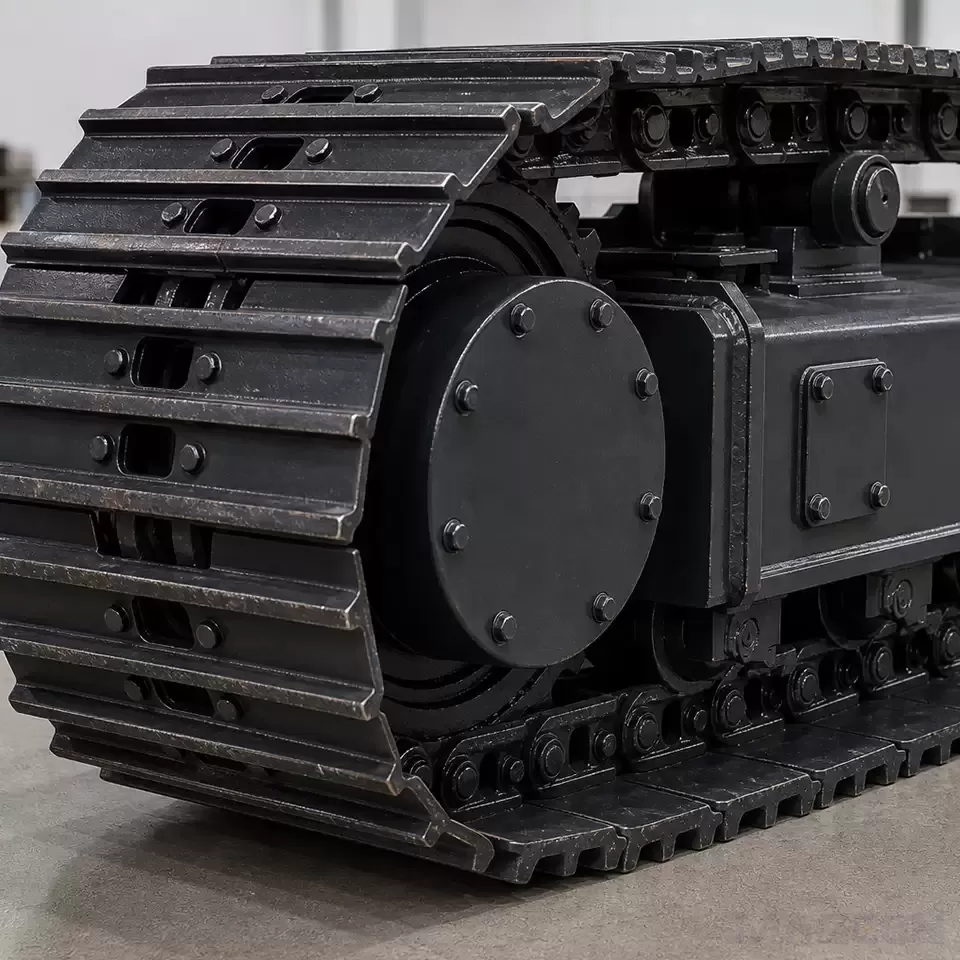
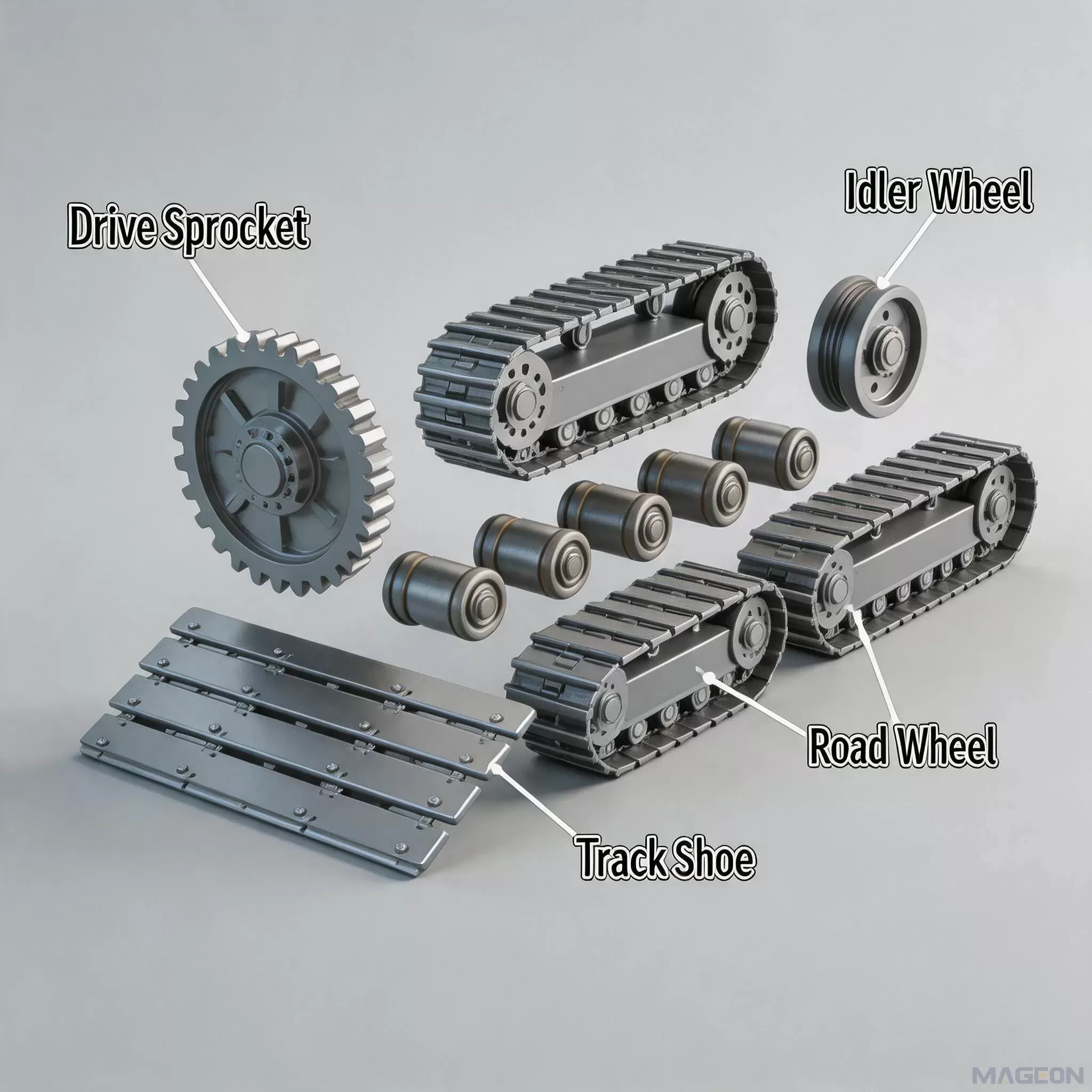
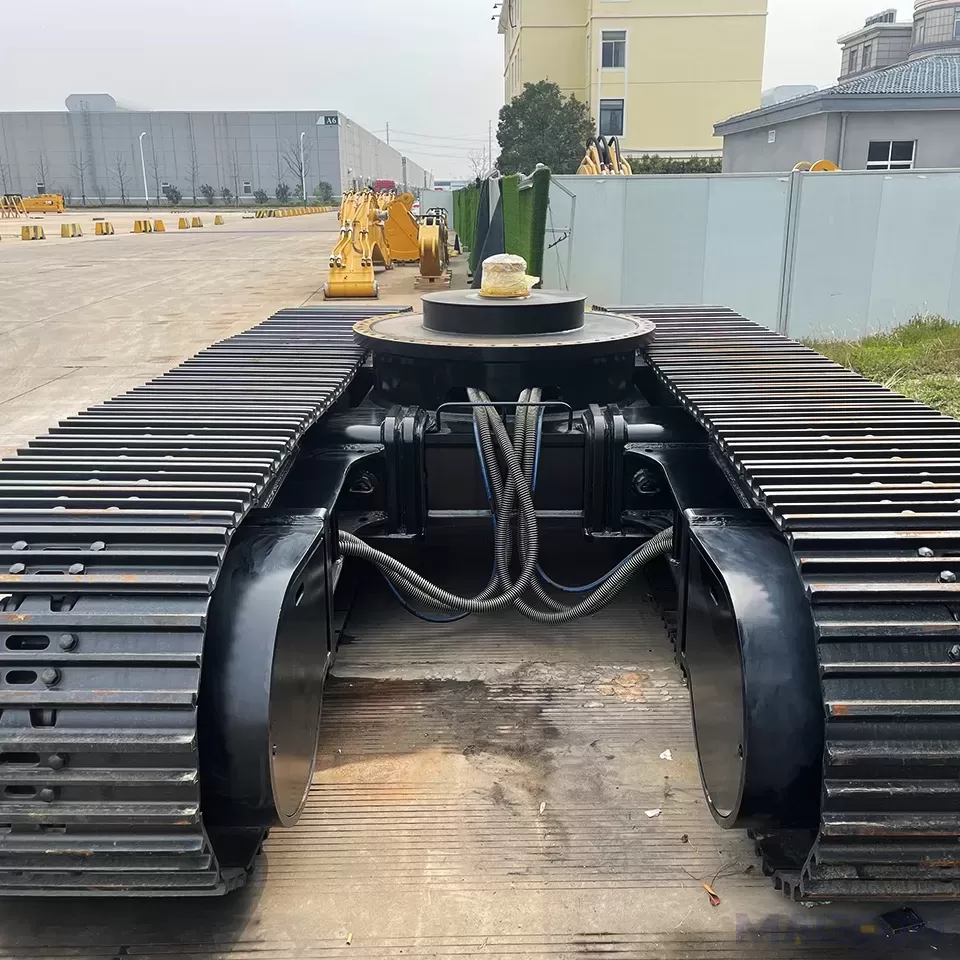
A steel crawler undercarriage is the foundational mobility system that enables heavy machinery to traverse terrains that would be impassable for wheeled vehicles. Designed with exceptional load-bearing capacity and traction, these undercarriages consist of interconnected steel tracks, drive sprockets, idlers, rollers, and tension-adjusting components that work in precise coordination to distribute weight and propel equipment forward.
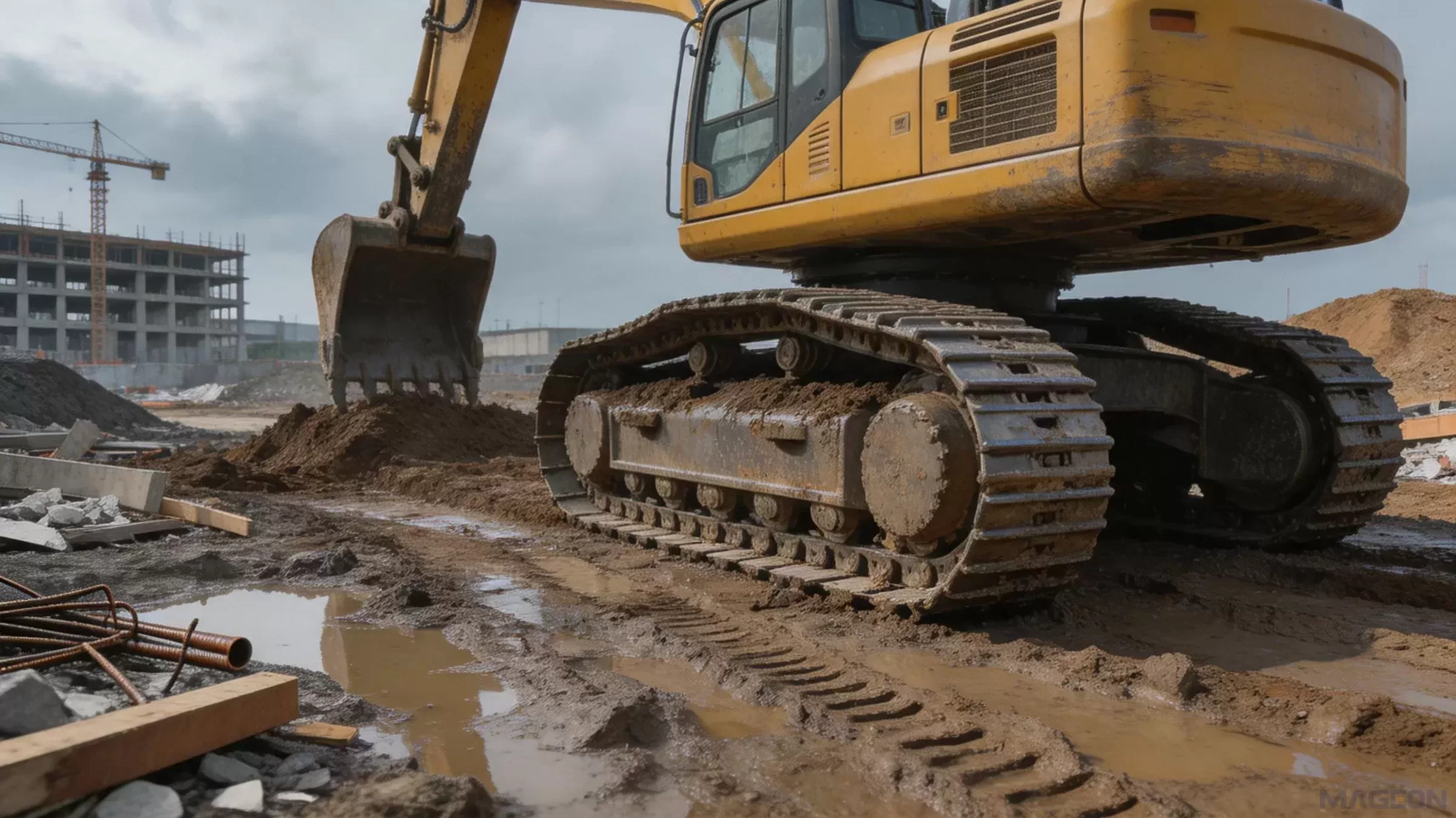
According to industry data from 2025, steel crawler undercarriages demonstrate a 40-60% higher ground pressure distribution efficiency compared to rubber alternatives, making them indispensable for operations on uneven, rocky, or muddy surfaces. The International Construction Machinery Association (ICMA) reports that over 75% of mining excavators and 68% of large crawler cranes operating globally rely on steel undercarriages due to their unmatched durability in extreme conditions.
The fundamental principle behind steel crawler systems is remarkably simple yet highly effective: multiple steel link plates connected by pins and bushings form a continuous track that wraps around the drive sprocket. As the drive sprocket rotates, it engages with the track links, propelling the vehicle forward while the massive contact area with the ground provides exceptional stability and traction. This mechanism allows machines weighing from 5 to 200 tons to operate safely on slopes up to 35 degrees—a capability essential for construction, mining, and forestry applications worldwide.
Steel vs. Rubber Tracks: How to Choose the Right Undercarriage for Your Application
Selecting between steel and rubber tracks is a critical decision that directly impacts equipment performance, operating costs, and project timelines. Below is a comprehensive comparison based on real-world operational data and industry benchmarks from 2024-2025:
| Criteria | Steel Crawler Undercarriage | Rubber Track Systems |
|---|---|---|
| Load Capacity | Up to 200 tons (heavy-duty excavators, cranes) | Typically 5-15 tons (compact equipment) |
| Terrain Suitability | Rock surfaces, construction debris, sharp objects | Pavements, lawns, soft soil |
| Service Life | 8,000-12,000 operating hours | 2,000-4,000 operating hours |
| Traction Performance | Superior on slopes and unstable ground | Adequate for flat, smooth surfaces |
| Maintenance Interval | 500-800 hours (lubrication & tension check) | 200-300 hours (track replacement) |
| Initial Cost | Higher ($3,000-$15,000 depending on size) | Lower ($800-$3,000) |
| Surface Damage Risk | Minimal (highly concentrated pressure) | Higher on fragile surfaces |
| Repairability | Individual components replaceable | Entire track typically replaced |
When to Choose Steel Crawler Undercarriage:
Mining Operations: The Global Mining Equipment Market Report 2025 indicates steel undercarriages account for 85% of mining machinery due to their ability to withstand abrasive rock surfaces and heavy loads of 50+ tons
Construction Excavators: For excavators above 20 tons, steel tracks provide 3x longer lifespan and reduce downtime by approximately 35% compared to rubber alternatives
Drilling Rigs: Oil and gas drilling equipment operating on remote, rugged terrain requires steel undercarriages with reinforced track links to handle extreme ground conditions
High-Slope Applications: Steel tracks maintain traction on 30-35 degree slopes where rubber tracks frequently slip or detach
When to Choose Rubber Tracks:
Urban Construction: Municipal projects where surface protection is paramount (minimal damage to concrete, asphalt)
Agricultural Equipment: Light-duty tractors and harvesters operating on soil without rock debris
Compact Machinery: Mini excavators and skid steers under 5 tons where maneuverability and low noise are priorities
Industry expert Dr. Michael Thompson, Chief Engineer at the Heavy Equipment Research Institute, states: "For any application involving loads over 10 tons or operation on rock surfaces, steel crawler undercarriages are not just recommended—they're essential for safety and operational efficiency. The 3-4x longer service life offset the higher initial investment within 18 months of intensive use."
Core Components of Steel Crawler Undercarriage Systems
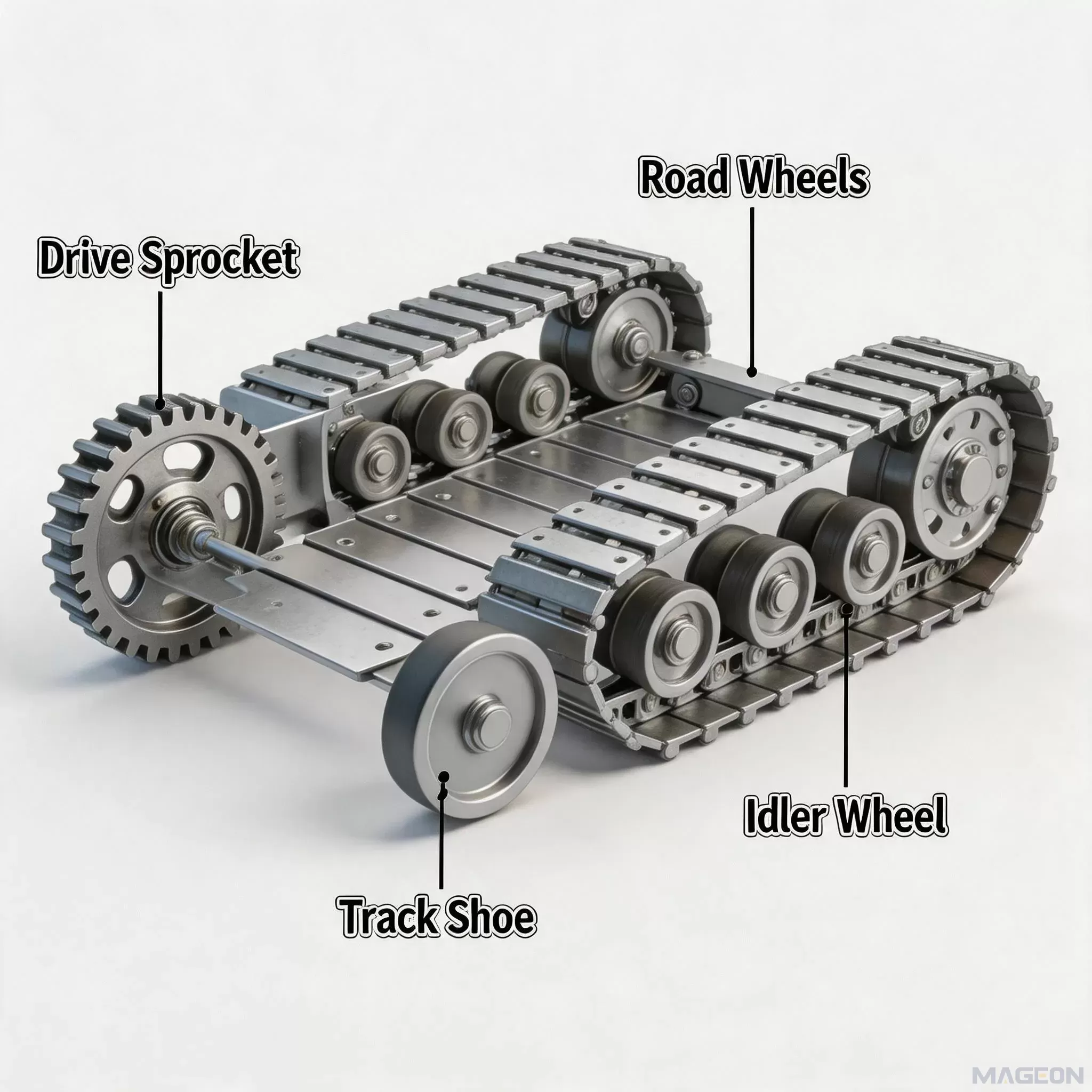
A steel crawler undercarriage is an intricate assembly of precision-engineered components, each serving a critical function in the system's overall performance. Understanding these components is crucial for proper maintenance, troubleshooting, and making informed procurement decisions.
1. Track Links
Track links form the continuous track that contacts the ground. Manufactured from high-grade manganese steel (typically 35Mn-45Mn) , these links provide exceptional wear resistance and impact strength. Standard track links range from 150mm to 350mm in width, with thickness varying from 8mm to 30mm depending on load requirements.
Key Specifications:
Tensile strength: 850-950 MPa
Hardness: 280-320 HB (Brinell)
Weight per link: 15-80 kg (depending on size)
Service life: 8,000-12,000 hours under normal conditions
2. Drive Sprocket
The drive sprocket transmits engine power to the track system. Typically made from 40Cr alloy steel, it features precisely machined teeth that engage with track link bushings. Sprocket teeth undergo induction hardening to 50-55 HRC (Rockwell Hardness) for extended durability.
Industry Data:
Sprocket replacement interval: 4,000-6,000 hours
Failure rate with proper maintenance: <0.5% annually
Power transmission efficiency: 92-95%
3. Idler
Located opposite the drive sprocket, the idler wheel maintains track tension and guides the track around the chassis. Idler assemblies include rotary seals and self-lubricating bushings to minimize maintenance requirements.
4. Carrier Rollers & Track Rollers
Carrier rollers support the upper track section, preventing excessive sag and reducing vibration. Track rollers support the machine's weight and distribute ground pressure. Both utilize hardened chrome-plated shafts and double-lip seals for extreme-duty applications.
Performance Metrics:
Roller rotation speed: Up to 150 RPM at maximum speed
Bearing life: 6,000-10,000 operating hours
Load capacity per roller: 5-15 tons
5. Track Adjuster
The track adjuster maintains optimal track tension, typically using a hydraulic cylinder with a spring-loaded retraction mechanism. Proper tension reduces premature wear and prevents track derailment.
Optimal Tension Guidelines:
Track sag (distance between idler and sprocket): 20-40mm for 20-ton class machines
Tension check frequency: Every 250 operating hours
Adjuster hydraulic pressure: 150-250 bar (manufacturer-specific)
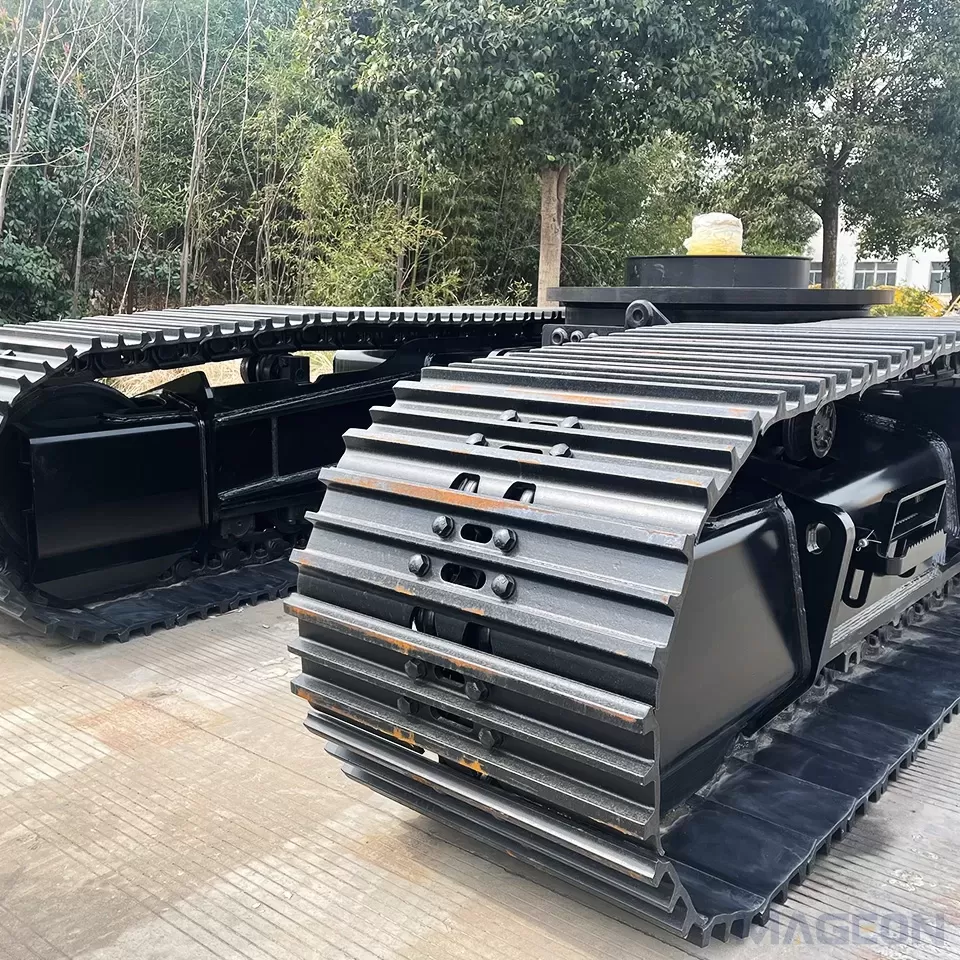
Major Industries Utilizing Steel Crawler Undercarriages
Steel crawler undercarriages serve as the backbone for heavy machinery across multiple global industries, with specific applications optimized for each sector's unique challenges.
1. Construction Industry
The construction sector represents the largest market for steel crawler systems, accounting for approximately 45% of global undercarriage demand in 2025. Key applications include:
Crawler Excavators: Machines from 6 to 80 tons rely on steel tracks for foundation work, trenching, and heavy-duty excavation
Crawler Cranes: Lifting capacities of 50-300 tons require steel undercarriages with reinforced track links for stability
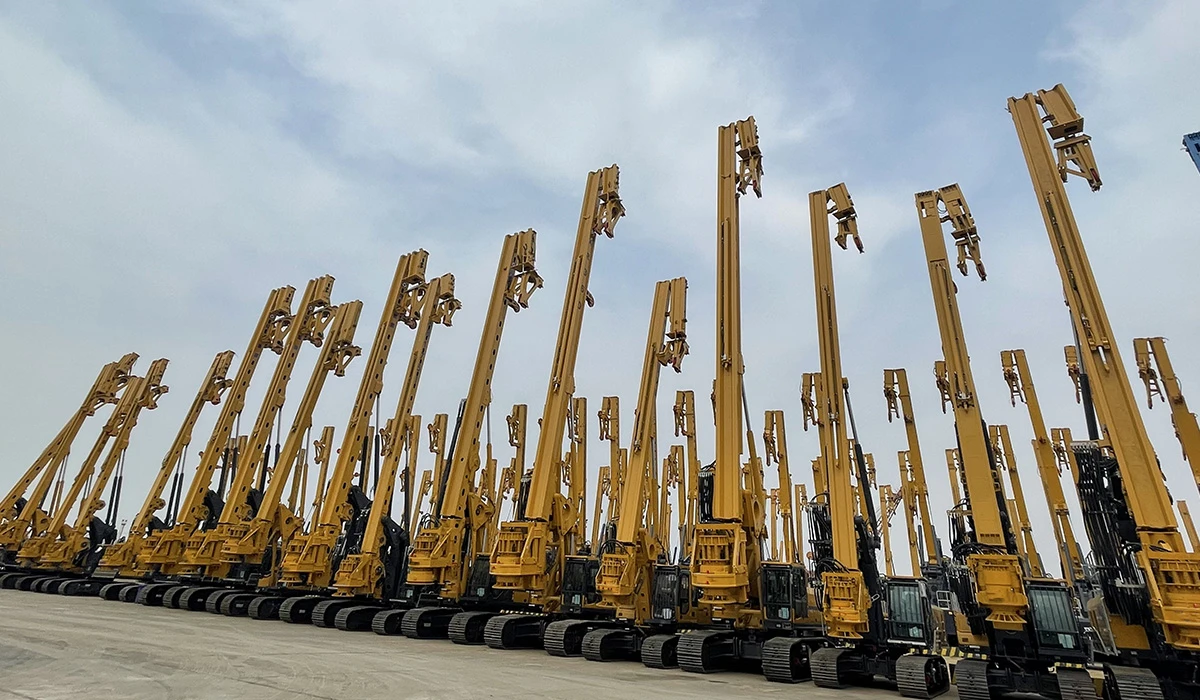
Pile Drivers: Specialized steel undercarriages withstand the immense vibration and lateral forces during pile driving operations
Industry Insight: The World Construction Equipment Market Report 2026 projects the construction crawler undercarriage market to reach $8.2 billion by 2030, growing at a CAGR of 5.8% from 2025 levels.
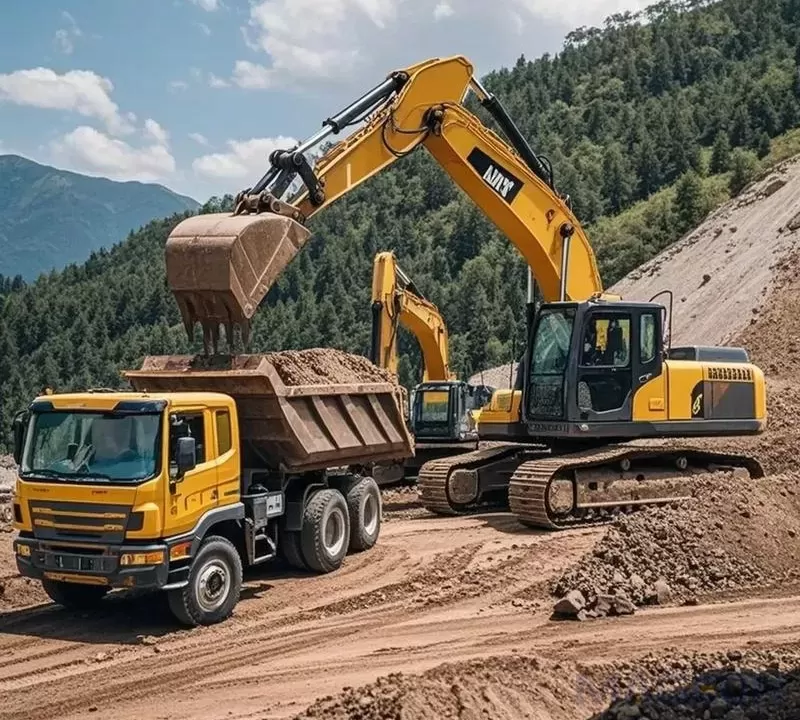
2. Mining Sector
Mining operations demand the most robust undercarriage systems due to extreme conditions, abrasive materials, and continuous heavy loads. Steel crawler undercarriages in mining must withstand:
Rock abrasion: Silica-rich rock surfaces accelerate wear rates by 30-50% compared to construction applications
Corrosive environments: Acidic mine water and chemical exposure require specialized coating systems
Continuous operation: 20-24 hour operations demand 2-3x longer service intervals
Market Data: According to the International Mining Association, 89% of large mining excavators (20+ tons) utilize steel crawler undercarriages, with replacement cycles averaging 6,000-8,000 hours of operation.
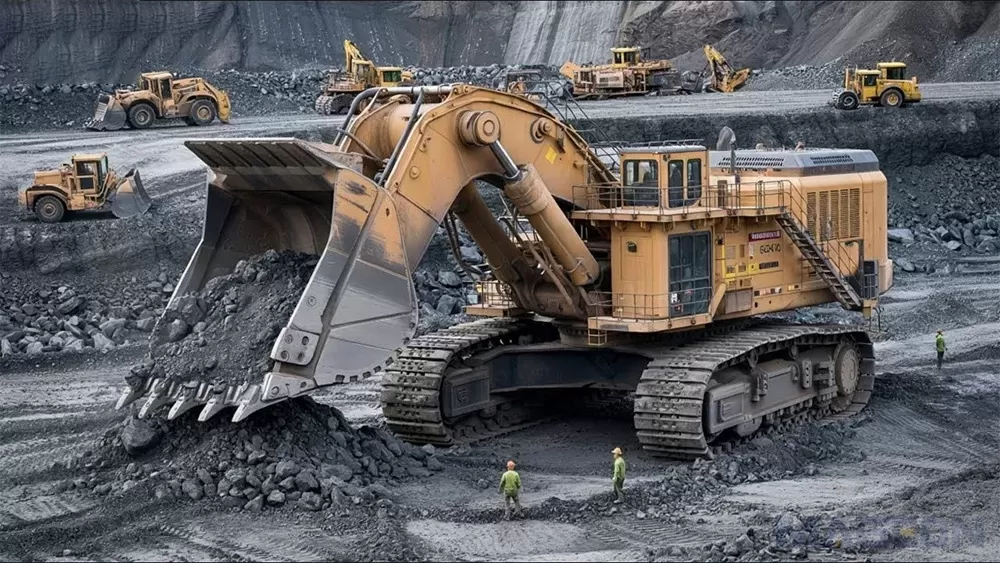
3. Drilling Rigs & Oil & Gas
Crawler-mounted drilling rigs rely on steel undercarriages for mobility across remote and uneven terrain. Key requirements include:
High torque transmission: Drive systems must handle drilling rotation forces transferred to the undercarriage
Extended field service: Rigs operate in remote locations for months without maintenance access
Extreme temperature tolerance: From -40°C Arctic operations to +50°C desert drilling
Application Example: A 30-ton crawler drilling rig operating in Siberian oil fields averaged 9,500 hours of continuous operation before requiring major undercarriage overhaul, demonstrating the exceptional reliability of properly maintained steel systems.
4. Agricultural & Forestry
While rubber tracks dominate agricultural applications, steel undercarriages serve specialized forestry and heavy-duty agricultural equipment:
Forestry Harvesters: Operating on steep, rock-strewn terrain with heavy loads of 15-30 tons
Heavy-duty Tractors: Large-scale farming operations in rocky regions requiring exceptional traction
Specialized Machinery: Soil compactors and industrial tractors for field preparation
Performance Data: Forestry equipment with steel crawler undercarriages demonstrates 25% higher productivity on slopes exceeding 20 degrees compared to rubber-tracked alternatives, according to the 2025 Forestry Machinery Performance Study.
MAGEON's Manufacturing Excellence: Engineering Superior Steel Crawler Undercarriages
Since 2010, MAGEON has established itself as a premier manufacturer of steel crawler undercarriage systems, combining advanced manufacturing technology with deep industry expertise. Our commitment to quality, precision, and customer-focused solutions has positioned us as a trusted partner for heavy equipment manufacturers and operators worldwide.
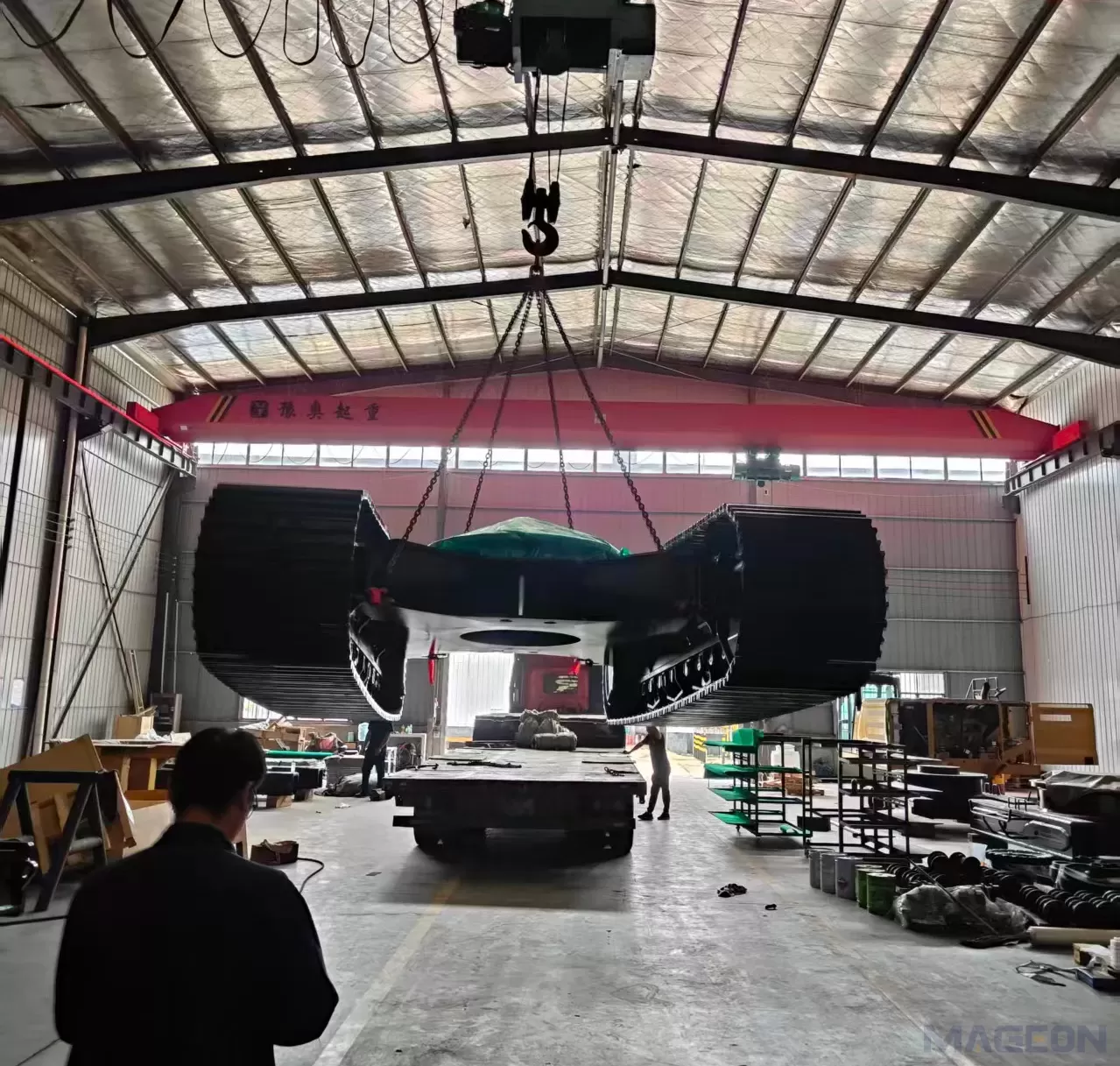
Advanced Manufacturing Processes
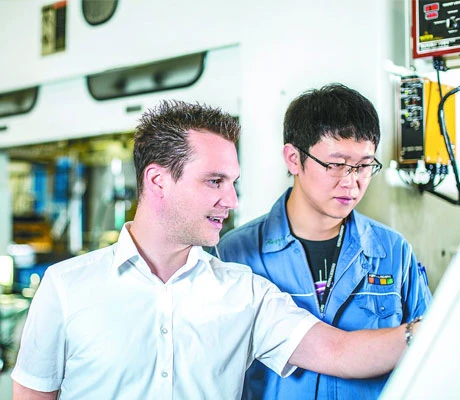
MAGEON's production facilities integrate cutting-edge manufacturing technologies to deliver undercarriage components that exceed industry standards:
1. Precision CNC Machining
20+ advanced CNC machining centers with ±0.01mm tolerance capability
Automated tool change systems reducing setup time by 40%
Real-time dimensional monitoring ensuring 99.8% dimensional accuracy
2. Heat Treatment Excellence
Induction hardening equipment from Europe achieving 50-55 HRC hardness
Controlled atmosphere furnaces for consistent metallurgical properties
Hardness testing with ±2 HRC precision on every component
3. Automated Assembly Lines
Robotic assembly stations reducing human error by 85%
Integrated torque verification systems ensuring proper bolt tensioning
Real-time quality monitoring with automated defect detection
Manufacturing Metrics 2025:
Annual production capacity: 120,000 sets of undercarriage components
First-pass yield rate: 98.5%
On-time delivery: 99.2%
Customer return rate: <0.3%
Premium Materials & Quality Standards
MAGEON sources materials from certified suppliers and implements rigorous quality control throughout the supply chain:
Material Specifications:
Track links: High-manganese steel (45Mn) from Baosteel
Sprockets: 40Cr alloy steel with ISO 6431 certification
Roller shafts: 42CrMo with chrome plating (25-35 μm)
Seals: NBR rubber compound from European manufacturers
Quality Assurance Systems:
ISO 9001:2015 certified manufacturing processes
IATF 16949 automotive-grade quality standards
100% ultrasonic testing for critical components
Spectral analysis verification on all steel batches
Salt spray corrosion testing (≥96 hours resistance)
Comprehensive Testing & Validation
Before delivery, every MAGEON undercarriage undergoes extensive testing:
Static Load Testing:
1.5x rated load for 24 hours
Structural integrity verification
Weld seam inspection with NDT (Non-Destructive Testing)
Dynamic Performance Testing:
500-hour continuous operation on test track
Temperature monitoring under load (-20°C to +60°C)
Vibration analysis and noise measurement
Field Validation:
Beta testing with partner customers across 20 countries
Real-world performance data collection and analysis
Continuous improvement feedback loops
Test Results 2026:
Mean Time Between Failures (MTBF): 12,500 hours
Failure rate under warranty: <0.8%
Customer satisfaction rating: 4.8/5.0
Global Export Capabilities
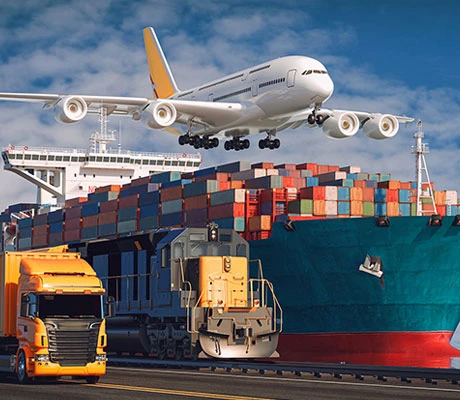
MAGEON's export-focused business model includes:
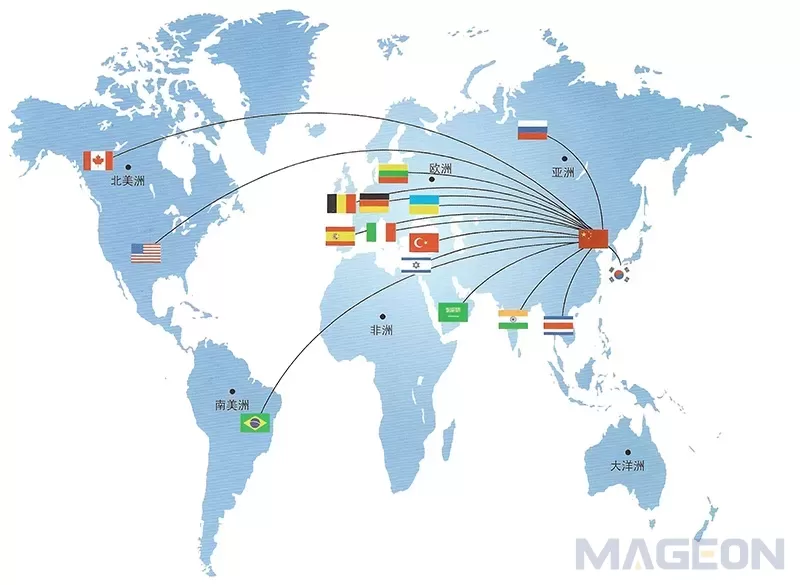
Export to 45+ countries across 6 continents
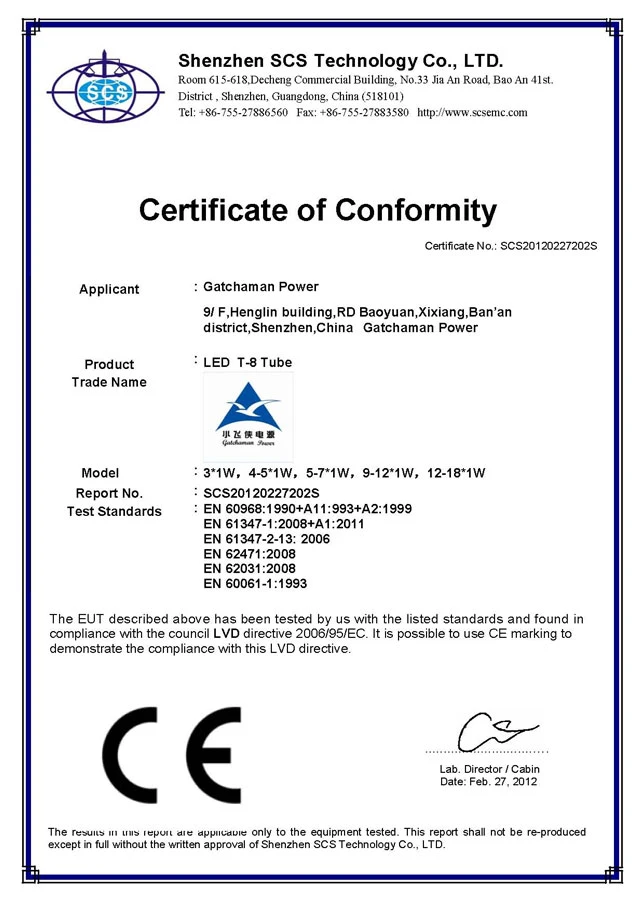
CE certification for European markets
Specialized packaging for ocean freight
Local technical support teams in key markets
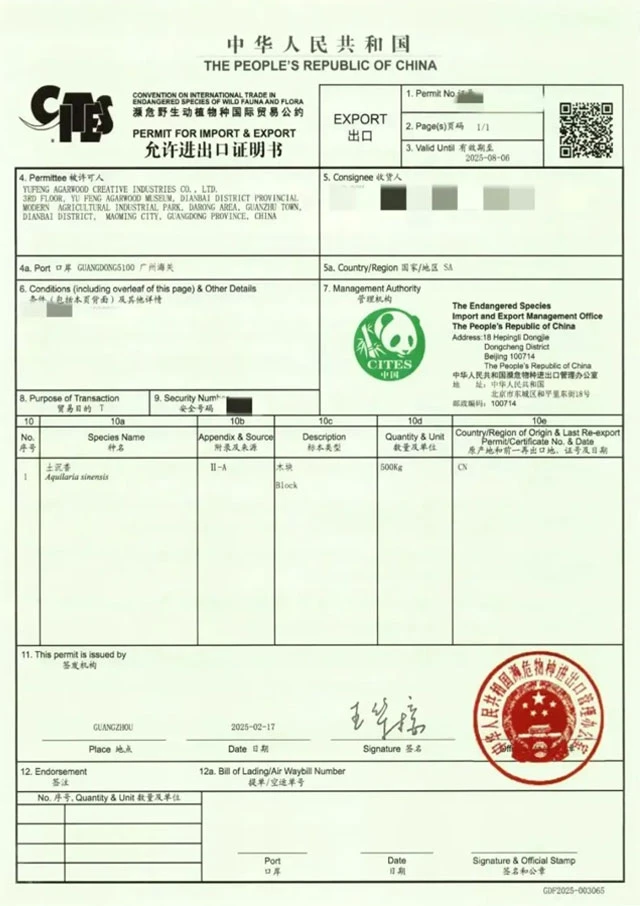
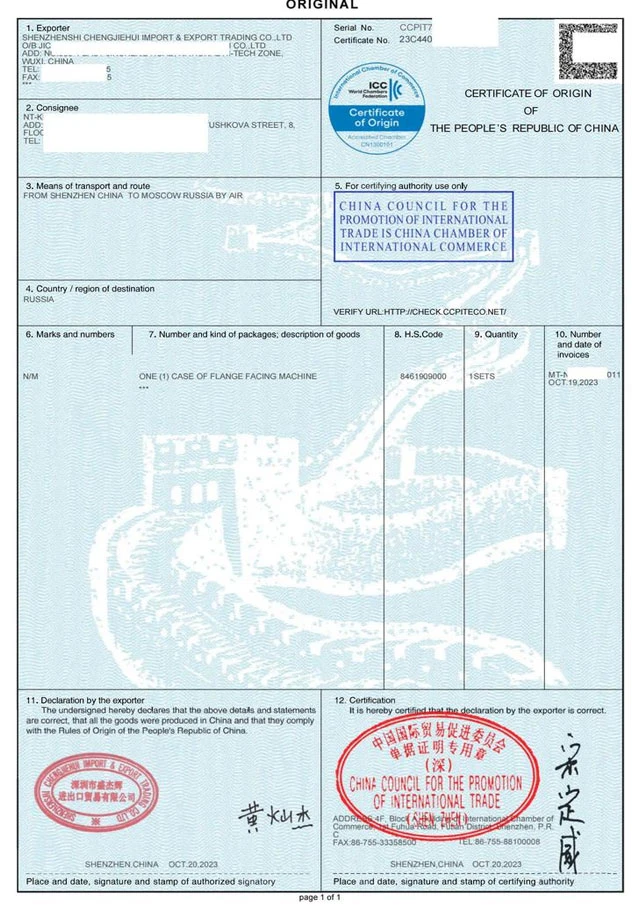
Multilingual documentation (English, Spanish, Russian, Arabic)
Export Performance:
Annual export volume: 75% of total production
Top markets: Russia (22%), USA (15%), Germany (12%), Australia (10%)
Market growth: 18% YoY (2024-2025)
Custom Engineering Solutions
MAGEON's engineering team specializes in application-specific undercarriage solutions:
Customization Capabilities:
Track width: 150mm to 600mm
Load capacity: 5 to 200 tons
Special materials for extreme environments
Custom bolt patterns and mounting interfaces
Reinforced designs for high-impact applications
Recent Projects:
Custom 180-ton undercarriage for mining excavator (2025)
Arctic-grade tracks for -50°C operation in Northern Russia
Corrosion-resistant undercarriage for offshore drilling applications
Quick-release track system for rapid maintenance
Frequently Asked Questions About Steel Crawler Undercarriages
Q: What is the average service life of a steel crawler undercarriage?
A: Under normal operating conditions with proper maintenance, steel crawler undercarriages typically last between 8,000 to 12,000 operating hours. Heavy-duty applications in mining or abrasive environments may reduce service life to 6,000-8,000 hours, while lighter construction applications can extend life to 12,000-15,000 hours. Regular lubrication, tension adjustment, and component inspection are essential for maximizing service life.
Q: How often should steel track undercarriage be lubricated?
A: Lubrication requirements vary by manufacturer and application, but general guidelines suggest lubricating all moving components every 250-500 operating hours. Critical lubrication points include track roller bearings, idler bushings, drive sprocket bearings, and track adjuster mechanisms. Using manufacturer-recommended lubricants with extreme pressure (EP) additives significantly extends component life, especially in harsh operating conditions.
Q: Can steel crawler undercarriages be repaired or must they be completely replaced?
A: Steel crawler undercarriages are designed for component-level repair rather than complete replacement. Individual components such as track links, sprockets, rollers, idlers, and adjusters can be replaced as they wear out, significantly reducing lifecycle costs. Most manufacturers offer individual spare parts, and experienced technicians can perform partial overhauls replacing only worn components while retaining serviceable parts. This modular repair approach typically costs 40-60% less than complete undercarriage replacement.
Q: What are the signs that a steel crawler undercarriage needs replacement?
A: Key indicators include: (1) Excessive track sag that cannot be corrected with tension adjustment; (2) Visible cracks or severe wear on track link pins and bushings; (3) Sprocket teeth worn beyond manufacturer specifications (typically <3mm tooth height remaining); (4) Roller bearings making excessive noise or showing play; (5) Frequent track derailment despite proper tension; (6) Uneven wear patterns indicating structural issues. When repair costs exceed 60% of replacement cost, complete undercarriage replacement becomes more economical.
Q: How does ground pressure affect steel crawler undercarriage performance?
A: Ground pressure is a critical factor in undercarriage performance and longevity. Steel crawler undercarriages distribute machine weight across a large contact area, typically achieving ground pressures of 0.4-0.8 kg/cm² compared to wheeled vehicles' 2.0-3.5 kg/cm². Lower ground pressure reduces soil disturbance, improves flotation on soft surfaces, and decreases component wear rates. Operating on extremely soft terrain (mud, sand) may require wider tracks or specialized designs to prevent excessive ground penetration and improve mobility.
Q: Are steel crawler undercarriages suitable for operating in cold climates?
A: Yes, steel crawler undercarriages perform exceptionally well in cold climates when properly specified and maintained. Arctic-grade models feature special steels with improved low-temperature toughness (-40°C to -50°C impact resistance), cold-resistant lubricants, and seals that remain flexible in extreme cold. Key considerations include pre-heating components before operation, using cold-start procedures, and selecting undercarriages designed for the specific operating temperature range. Mining operations in Northern Russia and Canada routinely operate steel crawler equipment at -40°C with proper cold-weather specifications.
Q: What maintenance intervals are recommended for steel crawler undercarriages?
A: Recommended maintenance intervals based on operating hours: (1) Daily: Visual inspection for damage, track tension check; (2) Every 250 hours: Lubricate all moving components, check for abnormal wear; (3) Every 500 hours: Detailed inspection of track links, sprockets, rollers; (4) Every 1,000 hours: Complete undercarriage inspection, measure component wear; (5) Every 2,000-3,000 hours: Major maintenance including roller bearing replacement, track pin inspection; (6) Every 4,000-6,000 hours: Sprocket replacement or refurbishment. More frequent inspections are required in abrasive or corrosive environments.
Q: How do I choose the right size steel crawler undercarriage for my application?
A: Selecting the correct undercarriage requires considering multiple factors: (1) Machine weight and maximum load capacity (undercarriage must support 1.5x maximum load); (2) Operating terrain (rock, mud, sand, etc.); (3) Required traction and slope capability; (4) Ground pressure limitations; (5) Operating hours per year; (6) Environmental factors (temperature, corrosion potential). Consult with manufacturer technical specialists who can perform application-specific calculations. Providing detailed application data ensures optimal selection balancing performance, durability, and cost-effectiveness.
Conclusion: Partnering with MAGEON for Reliable Steel Crawler Undercarriage Solutions
Understanding steel crawler undercarriage systems—from component functions and application considerations to maintenance best practices—is essential for maximizing heavy equipment performance and minimizing total ownership costs. As global industries continue to demand higher productivity and greater durability from their machinery, selecting the right undercarriage partner becomes increasingly critical.
MAGEON's decade of manufacturing excellence, combined with our commitment to quality materials, precision engineering, and customer-focused solutions, positions us as your ideal partner for steel crawler undercarriage needs. Whether you require standard undercarriage components for construction excavators or custom-engineered solutions for extreme mining operations, our experienced team delivers products that exceed expectations in the most demanding environments worldwide.
Ready to discuss your steel crawler undercarriage requirements? Contact MAGEON's engineering team for application-specific recommendations, detailed quotations, and technical support tailored to your unique operational challenges. Our global export capabilities and localized service ensure you receive the right solution, delivered on time, wherever your operations are located.
Please leave your customization requirements, and we will contact you as soon as possible!
mageon